Phoenix Forge (Play’n GO): A Detailed Review of Pays Anywhere and Bonus Chains

Phoenix Forge by Play’n GO is one of the studio’s most technically ambitious slot releases in recent years. Launched as part of the provider’s continued expansion of cluster-based mechanics, the game combines the Pays Anywhere model with a structured bonus chain system that directly influences volatility, win frequency and session dynamics. As of 2026, Phoenix Forge remains relevant due to its transparent maths model, clearly defined RTP settings and carefully balanced progression features. This review focuses on how Pays Anywhere operates in practice, how bonus chains are triggered and extended, and what players should realistically expect from the game’s risk profile.
Pays Anywhere: Structure, Mathematics and Practical Impact
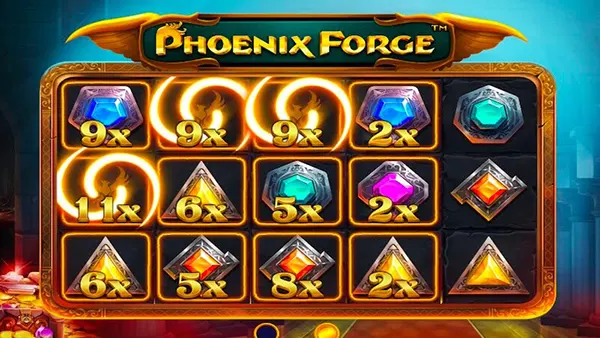
Phoenix Forge operates on a 5×5 grid and uses a Pays Anywhere system rather than traditional paylines. This means that winning combinations are formed by matching symbols anywhere on the grid, provided the minimum cluster requirement is met. In this title, clusters begin at five identical symbols, and larger clusters significantly increase the payout multiplier. This structure removes directional constraints and increases the probability of frequent base-level wins.
The theoretical return to player (RTP) in the default configuration is set at approximately 96.20%, although operators may apply alternative RTP models as permitted by regulation. The volatility rating is medium-high, meaning that while smaller cluster wins occur regularly, the largest payouts depend heavily on extended bonus sequences rather than base game hits. This makes bankroll management important for sustained sessions.
Unlike fixed-line slots, Pays Anywhere mechanics create a different distribution curve of wins. Instead of relying on line alignment, the game’s algorithm evaluates total symbol presence across the entire grid. In practice, this increases hit frequency but reduces the individual value of smaller wins, shifting the real earning potential toward chain reactions and bonus activation.
Symbol Weighting and Cluster Growth Mechanics
The symbol distribution in Phoenix Forge is deliberately weighted to encourage incremental cluster expansion. Low-value symbols appear more frequently, supporting smaller chain reactions, while premium symbols have lower probability but deliver higher multiplier scaling once cluster thresholds are exceeded. This controlled distribution ensures mathematical stability across long-term play.
When a winning cluster is formed, the symbols are removed and replaced through a cascade mechanic. This creates opportunities for consecutive cluster formations within a single paid spin. Each cascade recalculates the grid entirely rather than preserving directional patterns, reinforcing the Pays Anywhere identity of the game.
From a technical standpoint, the cluster engine uses a grid adjacency algorithm rather than a line-evaluation system. This allows the game to remain flexible for future mechanic adjustments and explains why the hit frequency feels more fluid compared to conventional 20-line or 243-ways titles from the same provider.
Bonus Chains: Progressive Activation and Feature Layers
The bonus chain system in Phoenix Forge is the game’s defining innovation. Instead of a single-trigger bonus round, the feature is built around progressive energy accumulation. Special forge symbols appear during base play and contribute to a visible chain meter. Once predefined thresholds are reached, sequential bonus stages unlock rather than activating all at once.
The first stage typically enhances cluster multipliers, while subsequent levels introduce expanding wilds or symbol upgrades. Each unlocked level remains active for the remainder of the bonus cycle, meaning that later stages significantly increase the payout potential. This layered progression adds structural depth rather than relying on a single high-variance free spins round.
Importantly, the chain system resets only after the full bonus sequence completes. This prevents partial loss of accumulated value and ensures that the volatility spike occurs during the final stages of the chain. As of 2026, this design aligns with Play’n GO’s broader trend toward persistent bonus models seen in several of their recent releases.
Free Spins Integration and Multiplier Scaling
When the highest bonus tier is reached, Phoenix Forge transitions into a free spins mode that retains previously unlocked chain enhancements. Free spins are typically awarded in batches of 10, with opportunities to extend through additional forge symbol clusters. The retention of prior upgrades is what differentiates this system from standard retrigger mechanics.
During free spins, multipliers can stack progressively, particularly if consecutive cascades occur within a single spin. While the maximum theoretical win is capped according to regulatory limits, the practical high-end payouts depend on extended cascade sequences combined with upgraded premium symbols. This makes the bonus stage substantially more volatile than the base game.
From a risk perspective, players should recognise that most of the game’s maximum win potential is concentrated in the later bonus tiers. The earlier chain stages provide moderate enhancements, but significant payout expansion requires sustained progression through multiple unlock thresholds.
Volatility Profile, Bankroll Strategy and 2026 Relevance
Phoenix Forge is categorised as medium-high volatility, but this classification can be misleading without context. The base game produces relatively consistent low-value cluster wins, giving an impression of stability. However, the long-term profitability of a session is heavily dependent on reaching advanced bonus chain levels.
Session duration planning is therefore important. Players operating with smaller bankrolls may experience gradual balance erosion if bonus chains are not triggered frequently enough. Conversely, extended sessions increase statistical exposure to the higher-tier bonus mechanics, where the game’s main value proposition lies.
From a compliance and fairness standpoint, Play’n GO continues to operate under major European licences, including UK Gambling Commission and Malta Gaming Authority oversight. The game uses certified random number generator (RNG) technology, and RTP variations must be clearly displayed by licensed operators as required by regulation in 2026.
Who the Game Suits and Practical Expectations
Phoenix Forge is best suited to players who prefer structured progression mechanics over single-spin volatility spikes. The chain-based design rewards patience and consistent wagering rather than rapid high-risk betting. It is less appropriate for those seeking immediate high multipliers without staged buildup.
The visual presentation supports the mechanical theme, but the game’s real strength lies in its mathematical transparency. Players who understand cluster volatility and progression-based bonuses will find the structure predictable in the long term, even though individual sessions remain subject to variance.
As of 2026, Phoenix Forge stands as a technically solid example of modern cluster slot design. Its Pays Anywhere mechanic ensures steady engagement, while the bonus chain system provides layered volatility that can escalate meaningfully when progression aligns with favourable cascade sequences.