San Quentin 2: Death Row — Is the Sequel Truly Harsher and Deeper Than the Original?
San Quentin 2: Death Row has quickly drawn attention among slot players who were already familiar with the first instalment. Developed by Nolimit City, the sequel builds on a recognisable foundation but shifts the tone, mechanics and pacing in noticeable ways. The question many players ask is not simply whether it is better, but whether it genuinely delivers a more intense and layered experience compared to the original release.
How the Sequel Expands the Core Mechanics
The original San Quentin slot established a strong identity through its volatile gameplay, prison theme and the widely discussed xWays feature. In the sequel, these core mechanics are not removed but reworked to support more complex interactions. The introduction of additional modifiers means that outcomes are less predictable, but also more structured around chained events rather than isolated spins.
One of the most notable additions is the enhancement of multipliers and persistent features. Instead of relying on occasional bursts of high value wins, San Quentin 2 places greater emphasis on building momentum within a single session. This creates a sense of progression that was less pronounced in the first game, where volatility often felt abrupt rather than cumulative.
The sequel also refines how symbols interact across reels. While the original leaned heavily on chaos-driven mechanics, the newer version balances that unpredictability with clearer internal logic. For players, this translates into gameplay that feels both aggressive and controlled, rather than purely random.
Volatility and Risk: A More Calculated Approach
San Quentin 2 remains a high volatility slot, but the way risk is presented has changed. In the original, long dry spells were often followed by sudden spikes in returns. The sequel still includes these swings, yet introduces more intermediate events that keep engagement levels consistent.
This shift is particularly visible in bonus rounds, where multiple layers of modifiers can activate simultaneously. Instead of relying on a single feature to deliver results, the game encourages combinations. As a result, players experience more frequent tension points, even if the largest wins remain rare.
From a technical perspective, this design aligns with modern slot development trends, where volatility is not just about extremes but about sustained engagement. San Quentin 2 reflects this evolution, offering a more calculated form of risk without reducing its overall intensity.
Thematic Depth and Narrative Elements
While the first San Quentin slot introduced a prison setting with a gritty aesthetic, the sequel takes a more deliberate approach to atmosphere. Visual design, sound effects and character representation have been expanded to create a stronger narrative presence. The environment feels less like a backdrop and more like an active part of the experience.
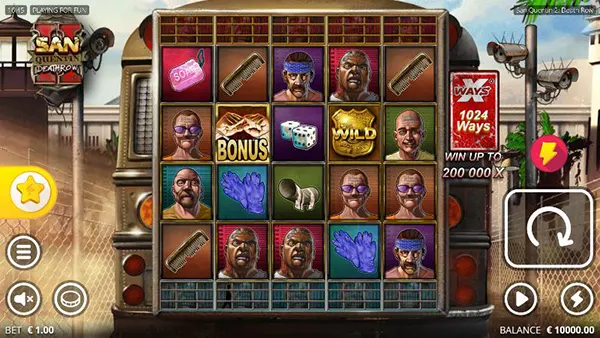
Character symbols in San Quentin 2 are more detailed and expressive, contributing to a clearer sense of identity. This is not just a visual upgrade but a thematic one, reinforcing the darker tone of the game. The developers appear to have focused on making each element serve both gameplay and storytelling purposes.
Sound design also plays a larger role. Background audio, transitions and feature triggers are used to build tension rather than simply mark events. This results in a more immersive experience, where players can anticipate changes before they happen.
Does the Sequel Feel More Mature?
Compared to the original, San Quentin 2 presents itself as a more refined product. The thematic elements are less exaggerated and more cohesive, which gives the game a sense of maturity. It does not rely solely on shock value but instead develops its atmosphere through consistency.
This maturity is also reflected in pacing. The game avoids overloading the player with constant visual noise, allowing key moments to stand out more clearly. When significant features activate, they feel earned rather than incidental.
For experienced players, this approach can make a noticeable difference. The game feels less like a series of disconnected events and more like a structured experience with its own rhythm and progression.
Win Potential and Player Expectations in 2026
By 2026, expectations around slot games have shifted significantly, particularly in terms of maximum win potential and feature depth. San Quentin 2 aligns with these expectations by offering higher theoretical payouts and more complex bonus structures. However, these improvements come with increased difficulty in reaching top outcomes.
The game’s maximum win potential is significantly higher than that of the original, but it is tied to rare combinations of features. This means that while headline figures are impressive, actual player experience will vary widely depending on session length and strategy.
Another important factor is transparency. Modern players are more aware of RTP, volatility and feature frequency. San Quentin 2 provides clearer information about these aspects, allowing players to make informed decisions rather than relying on guesswork.
Is It Truly Better Than the Original?
Whether the sequel is better depends largely on what a player values. Those who prefer raw, chaotic volatility may still favour the original, where outcomes felt less structured. However, players looking for depth and layered mechanics are likely to find the sequel more engaging.
San Quentin 2 does not replace the original but builds on it in a way that reflects current industry standards. It introduces more complexity without abandoning the core identity that made the first game successful.
In practical terms, the sequel can be seen as a more demanding version of the original. It requires patience and a willingness to engage with its systems, but in return offers a richer and more controlled gameplay experience.