Densho by Hacksaw Gaming: bonus choice mechanics and volatility explained

Densho by Hacksaw Gaming stands out not because of flashy visuals, but due to how it structures player decisions around bonuses and risk. The slot introduces a deliberate approach to volatility, where outcomes are shaped not only by randomness but also by the player’s selection of bonus paths. Understanding how these mechanics work is essential if you want to evaluate the game beyond surface-level RTP figures and into real session dynamics.
How bonus choice works in Densho
One of the defining elements of Densho is its selectable bonus system. Instead of triggering a fixed free spins round, the player is presented with multiple options, each tied to a different level of volatility. This means the bonus is not just a reward, but a strategic decision point where you influence potential outcomes.
Typically, the options range from safer configurations with higher hit frequency to aggressive setups with larger multipliers and fewer expected wins. For example, a low-risk bonus may offer more spins with moderate multipliers, while a high-risk option reduces spin count but significantly increases payout potential. This structure aligns with broader industry trends in 2025–2026, where player agency is becoming more prominent.
What matters in practice is not just the theoretical RTP, which often remains similar across options, but the variance profile. Choosing a high-volatility path increases the likelihood of long dry spells but also opens access to top-tier win potential that is otherwise unreachable in safer modes.
Strategic implications of bonus selection
The bonus choice in Densho is not purely cosmetic. It directly affects bankroll behaviour and session length. Players with smaller budgets often gravitate towards lower volatility options, as these provide more consistent engagement and reduce the risk of rapid balance depletion.
On the other hand, experienced players who aim for high multipliers tend to prefer aggressive bonus paths. These options are mathematically structured to deliver fewer but significantly larger payouts. However, this comes with increased variance, meaning longer sequences without notable returns are statistically expected.
From an analytical perspective, the choice reflects personal risk tolerance rather than a universally optimal strategy. No option guarantees better returns in the long term, but each creates a different gameplay experience, which is the core design philosophy behind the slot.
Volatility model and payout distribution
Densho operates on a high-volatility model, even before the bonus round is triggered. Base game wins are relatively infrequent, and most of the RTP is concentrated within bonus features. This structure is typical for Hacksaw Gaming titles released after 2023, where emphasis shifted towards feature-driven payouts.
The distribution of wins is uneven by design. Small wins occur sporadically, while significant payouts are tied to multiplier stacking within bonus rounds. This creates a gameplay curve where long quiet periods are interrupted by sudden spikes in balance.
Understanding volatility in this context means recognising that RTP alone does not reflect real session behaviour. Two players with identical RTP exposure may experience completely different outcomes depending on timing, bonus selection, and variance swings.
How volatility affects real gameplay sessions
In practical terms, high volatility translates into higher bankroll requirements. Players need to be prepared for extended sequences without meaningful returns. This is not a flaw but a structural characteristic of the game’s payout model.
Session planning becomes important. Short sessions may not capture the full potential of the game, especially if the bonus feature is not triggered. Conversely, longer sessions increase exposure to variance, which can either amplify losses or unlock high-value wins.
It is also worth noting that volatility interacts with stake size. Higher bets increase the absolute value of wins but also accelerate bankroll swings. Managing stake relative to balance is therefore a key factor when playing high-variance slots like Densho.
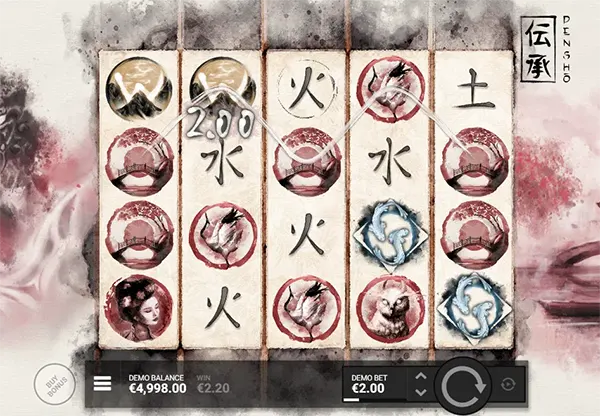
Comparing Densho to other Hacksaw Gaming slots
Hacksaw Gaming has developed a consistent approach to volatility and bonus mechanics across its portfolio. However, Densho introduces a more structured decision-making layer compared to earlier releases, where bonus features were fixed.
In titles like Wanted Dead or a Wild or Chaos Crew, volatility is predefined, and players adapt to it. In Densho, the player actively selects the volatility profile during bonus activation. This subtle shift changes how the game is approached and analysed.
From a design standpoint, this reflects a broader move towards hybrid mechanics, combining elements of traditional slots with decision-based gameplay. By 2026, this approach has become increasingly common, especially among providers focusing on experienced audiences.
What makes Densho distinct in 2026
The key difference lies in control. While the outcome remains random, the path to that outcome becomes partially adjustable. This creates a sense of involvement without altering the fundamental fairness of the game.
Another distinguishing factor is how volatility is communicated. Instead of abstract labels, Densho presents clear choices that translate directly into gameplay behaviour. This improves transparency, allowing players to make informed decisions.
Overall, Densho can be seen as a transition point in slot design. It retains the mathematical core of traditional games while integrating elements that appeal to players who want more influence over risk and reward dynamics.